Blog
State of the art hardware for BIM

Probably few people have asked the question so far: What do animated films, high-end cars, and cutting-edge architectural designs have in common? The answer, however, is simpler than you might think…
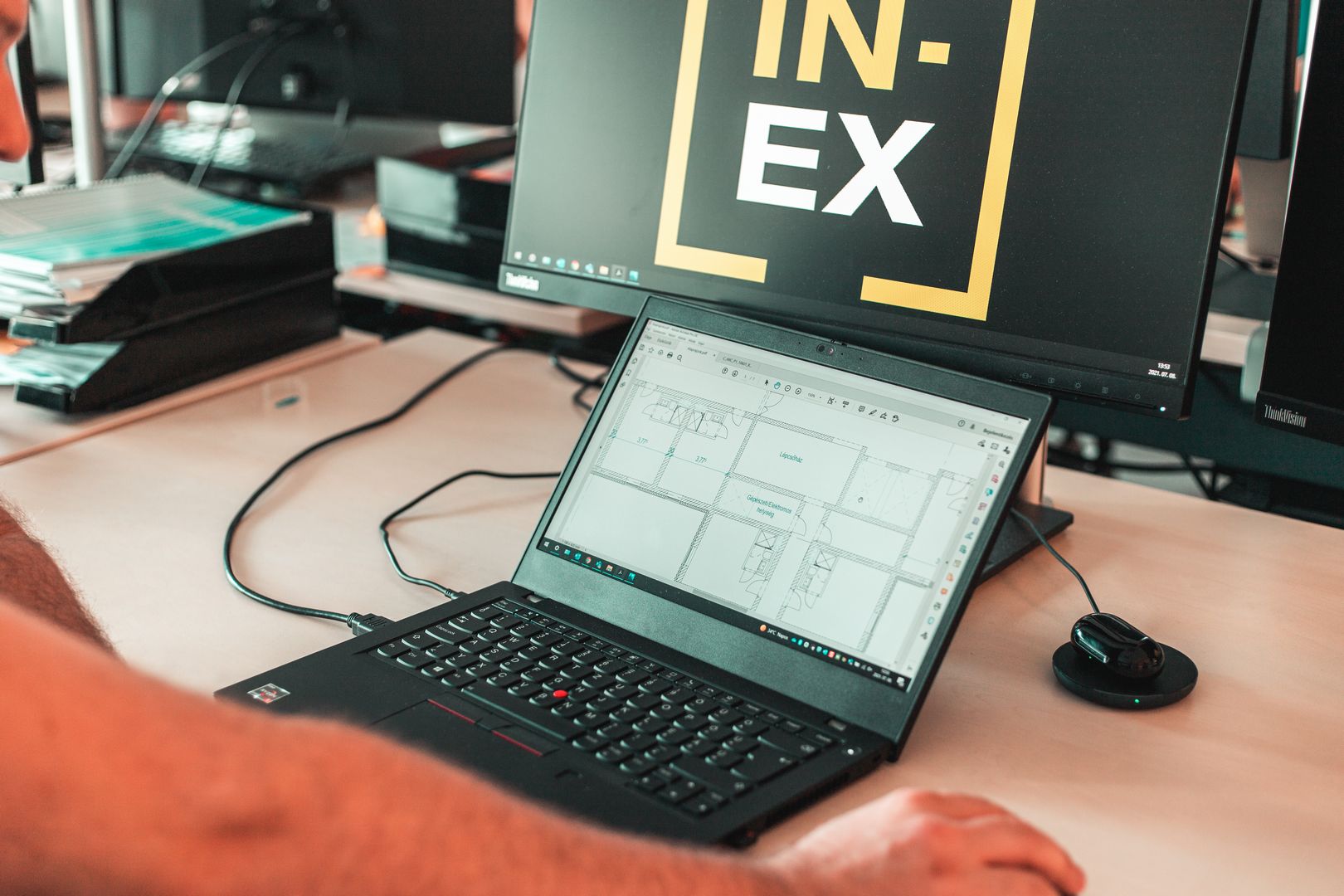
A major project of the past year is now coming to fruition. And we can do so by looking at BIM-based design from a new perspective, as part of a complex system. Our short film with Lenovo not only gives an insight into the everyday life of our office, but also provides interesting information about BIM-based design and the associated resource requirements. It has been mentioned in our previous post how the replacement and the standardisation of our workstations has been a major step forward for our designers.
In this context, an article on HVG’s website approaches BIM-based design from a completely new perspective. Probably few people have asked the question so far: What do animated films, high-end cars, and cutting-edge architectural designs have in common? The answer, however, is simpler than you might think: a lot of data being moved around. It is now obvious to everyone what the Lenovo workstations have to do with these. And if we think about it even further, it soon becomes clear that even the most diverse industries are in some way interconnected by technology and innovation. The article also highlights that within each sector, it is always those with the right quantity and quality of resources who can lead the way. It is with this in mind that the companies listed in this article – including us – are paying particular attention to the quality of their workstations, thereby making the work of their employees more comfortable and productive. If you are interested in how so many animated films can be produced year after year and how the design of the skyscraper on the MOL Campus is related to this, or if you are just curious what kind of hardware is needed to make it all happen nowadays, then you should definitely read the article published in HVG! Click here to read the article!
Recent posts
From idea to impact
At IN-EX, we believe that our greatest asset is the knowledge, experience and curiosity of our people. The Innovation Hub was created to ensure that our engineers’ ideas do not remain isolated suggestions: we give them space, develop them together, and take initiatives that create real value all the way through to implementation.
Structural Challenges of an Automated Warehouse System and a BIM-Based Solution
Our project serves as a good example of how adapting existing industrial buildings to modern technologies can present a complex engineering challenge. The implementation of the automated high-bay warehouse system involved not only a technological conversionbut also the adaptation of an existing reinforced concrete hall structure to new operational, structural, and fire safety requirements.
New Technology, Existing Structure: A Steel Structural Solution for the Conversion of an Automated High-Bay Warehouse
During the interior conversion of a high-bay warehouse attached to a manufacturing plant, it became necessary to install a state-of-the-art automated storage system. In the first phase of the project, we were commissioned to assess, at the conceptual design stage, whether the existing structural framework was suitable for accommodating the new technological system and to determine what structural modifications would be required to implement the conversion.
One Office, One Model: The Benefits of 3D Design and Multidisciplinary Collaboration
STUDIO IN-EX is a multidisciplinary design studio where almost every design discipline is represented under one roof. Every day, our colleagues experience the benefits of having designers from different disciplines work side by side, within a shared closed BIM environment and in the same office. What are these benefits in practice? We spoke to Lilla Vámos, one of our low-voltage systems designers, about her experience.
Case Study: Saving on Investment Costs Through Smart Warehouse Design
We believe that the investment cost of a project can be influenced to a significant extent during the design phase. For this reason, our approach goes beyond simply meeting the applicable requirements. We also investigate alternative technical solutions that can provide the same level of technical performance and safety while resulting in lower investment costs.
Model Checking Is Not About Finding Errors
In model-based design, a BIM model is no longer just a 3D representation. A well-structured model contains geometry, information, and discipline-specific relationships in a single source of truth. It drives drawings, quantity take-offs, schedules, equipment lists, technical data deliverables, and serves as the common platform for multidisciplinary coordination.