Blog
Automating AHU Family Creation

In the realm of engineering solutions, STUDIO IN-EX takes pride in providing practical innovations that simplify complex processes. Our collaboration with Rosenberg Gmbh exemplifies our dedication to delivering customized solutions that enhance the efficiency of Air Handling Unit (AHU) design for mechanical engineers. Through careful planning and expertise, we’ve crafted a tailored tool that simplifies the integration of AHU designer software with Revit content, easing the workload for mechanical engineers collaborating with Rosenberg Gmbh.
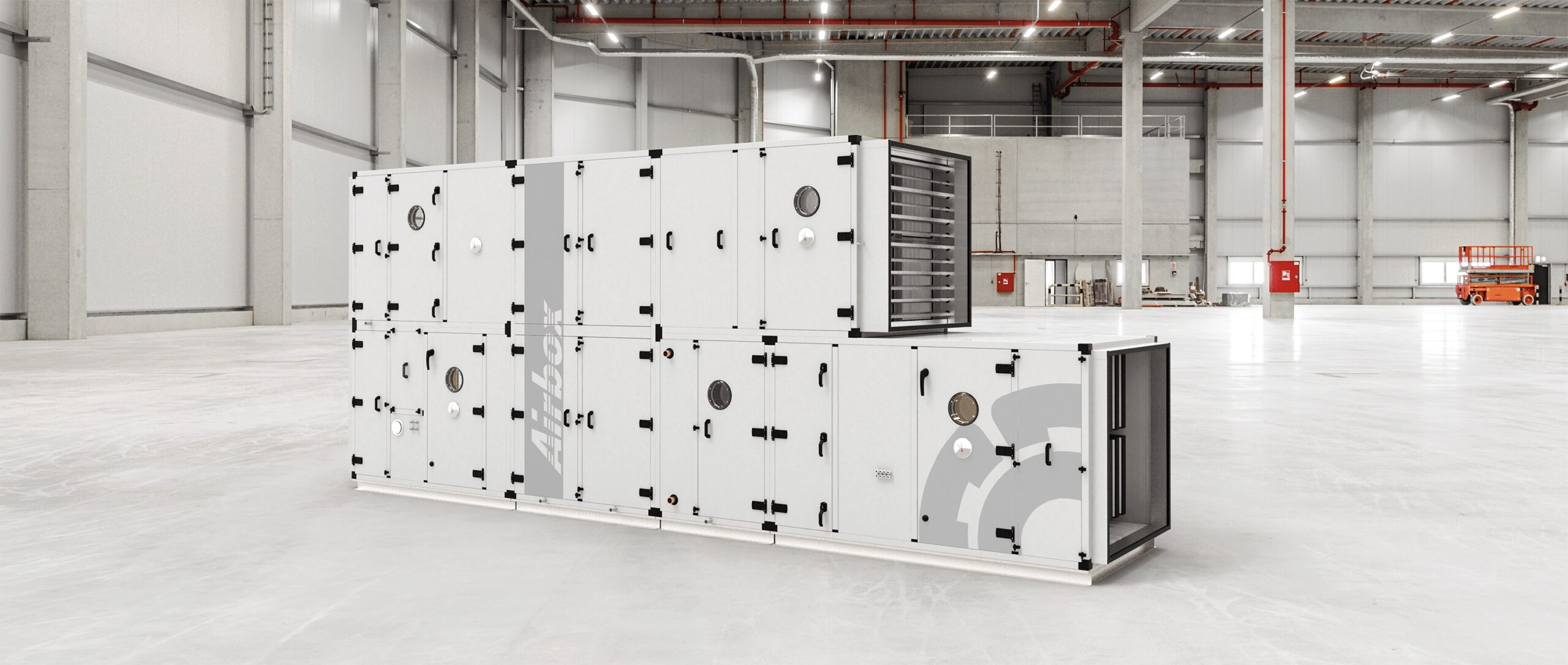
Tasked with the challenge of creating a seamless link between their AHU designer software and Revit content, we aimed to reduce the manual efforts of mechanical engineers in recreating equipment from 2D drawings. AHUs are inherently diverse and project-specific, necessitating an approach that streamlines the design process. Departing from traditional methods where engineers manually recreate equipment from 2D drawings in Revit, our tool automates the generation of dynamic Revit Families from the AHU designer software, minimizing the workload for mechanical engineers.
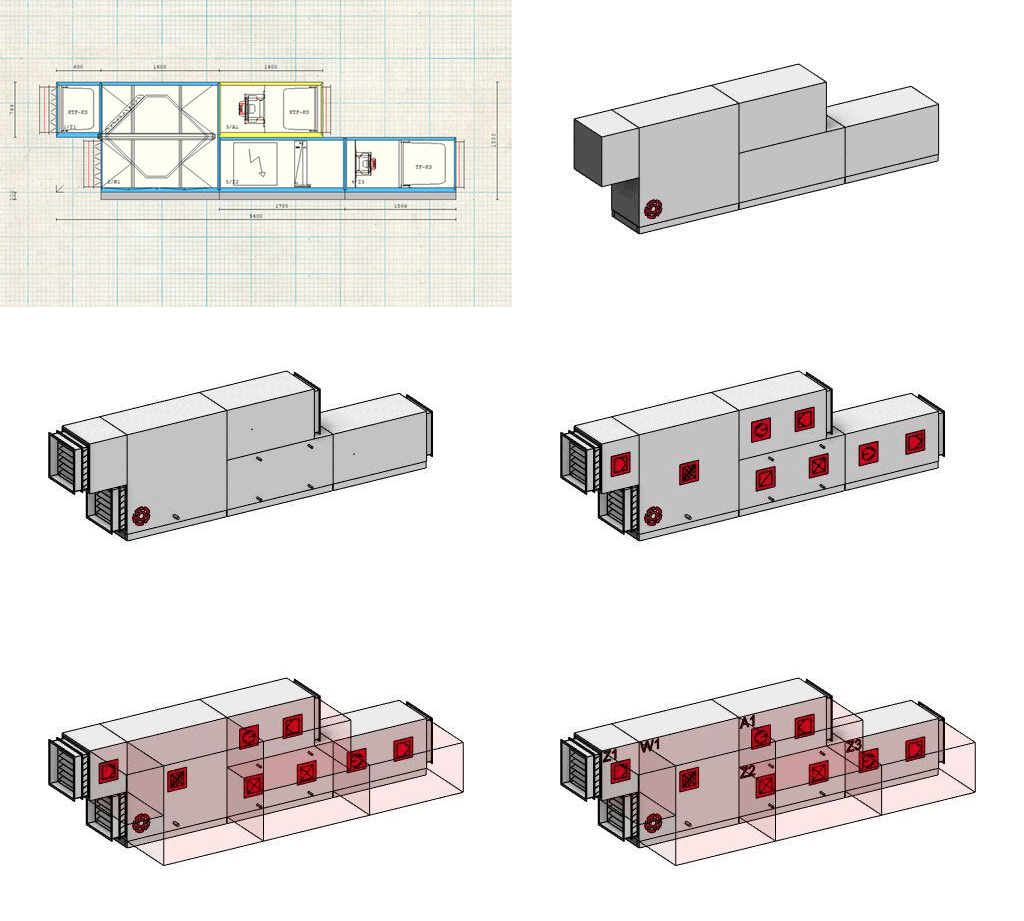
Our journey began with a deep understanding of Rosenberg’s AHU designer software. We developed a tool that assembles component families intelligently, setting their parameters to create the output family. This dynamic approach ensures the tool adapts to the specific requirements of each project, maintaining consistency and precision in every generated Revit Family.
The families generated by our tool encompass a comprehensive range of components, including housing modules, symbols for internal components, duct connector frames, rain protection hoods, grilles, and optional raincover roofs for outdoor placements. Our solution also incorporates pipe and electrical connectors with precise sizes and flow data, alongside a variety of parameters essential for informed engineering decisions.
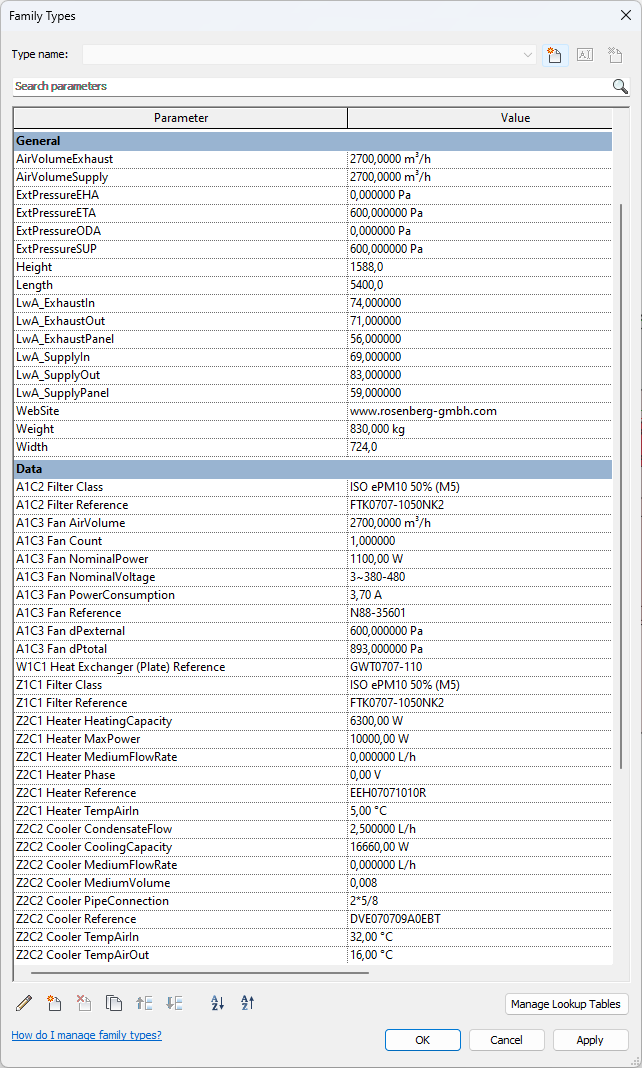
Recognizing the potential challenges of shared parameters, we opted for Family Parameters to grant mechanical engineers flexibility and control without compromising project integrity. These parameters can easily be converted into shared ones, allowing engineers the freedom to schedule or tag elements based on project requirements.
As the project progressed, we took a significant step towards efficiency by developing an advanced service. This service, operational on a server, autonomously monitors an input folder where data files are automatically exported by the AHU designer software. When a new file is detected, the service triggers the conversion process, generating the Revit Family and a corresponding screenshot in a predetermined output folder. This automation eliminates the need for manual intervention, providing Rosenberg’s staff with a seamless, hassle-free experience.
The success of our collaboration with Rosenberg Gmbh is reflected in the efficient delivery of results. Studio IN-EX has met and exceeded expectations, providing a solution that prioritizes simplicity and efficiency in AHU design for the collaborating mechanical engineers. Our dedication to practical innovation sets a new standard, and we look forward to continuing our journey as partners in enhancing engineering workflows.
At STUDIO IN-EX, we thrive on custom software development challenges within the AEC industry. Our expertise extends beyond AHU design to a wide array of tailored solutions. We welcome organizations seeking innovative, bespoke tools to enhance their workflows. Explore the possibilities with STUDIO IN-EX, where we transform unique requirements into efficient, cutting-edge solutions. Connect with us to embark on a journey of collaborative custom development that reshapes the landscape of the AEC industry.
Author: Tamás Déri, Deputy BIM Studio Leader
Recent posts
From idea to impact
At IN-EX, we believe that our greatest asset is the knowledge, experience and curiosity of our people. The Innovation Hub was created to ensure that our engineers’ ideas do not remain isolated suggestions: we give them space, develop them together, and take initiatives that create real value all the way through to implementation.
Structural Challenges of an Automated Warehouse System and a BIM-Based Solution
Our project serves as a good example of how adapting existing industrial buildings to modern technologies can present a complex engineering challenge. The implementation of the automated high-bay warehouse system involved not only a technological conversionbut also the adaptation of an existing reinforced concrete hall structure to new operational, structural, and fire safety requirements.
New Technology, Existing Structure: A Steel Structural Solution for the Conversion of an Automated High-Bay Warehouse
During the interior conversion of a high-bay warehouse attached to a manufacturing plant, it became necessary to install a state-of-the-art automated storage system. In the first phase of the project, we were commissioned to assess, at the conceptual design stage, whether the existing structural framework was suitable for accommodating the new technological system and to determine what structural modifications would be required to implement the conversion.
One Office, One Model: The Benefits of 3D Design and Multidisciplinary Collaboration
STUDIO IN-EX is a multidisciplinary design studio where almost every design discipline is represented under one roof. Every day, our colleagues experience the benefits of having designers from different disciplines work side by side, within a shared closed BIM environment and in the same office. What are these benefits in practice? We spoke to Lilla Vámos, one of our low-voltage systems designers, about her experience.
Case Study: Saving on Investment Costs Through Smart Warehouse Design
We believe that the investment cost of a project can be influenced to a significant extent during the design phase. For this reason, our approach goes beyond simply meeting the applicable requirements. We also investigate alternative technical solutions that can provide the same level of technical performance and safety while resulting in lower investment costs.
Model Checking Is Not About Finding Errors
In model-based design, a BIM model is no longer just a 3D representation. A well-structured model contains geometry, information, and discipline-specific relationships in a single source of truth. It drives drawings, quantity take-offs, schedules, equipment lists, technical data deliverables, and serves as the common platform for multidisciplinary coordination.