
Blog
A Competition for our Competition Team – A Nursery School in Thalgau, Austria

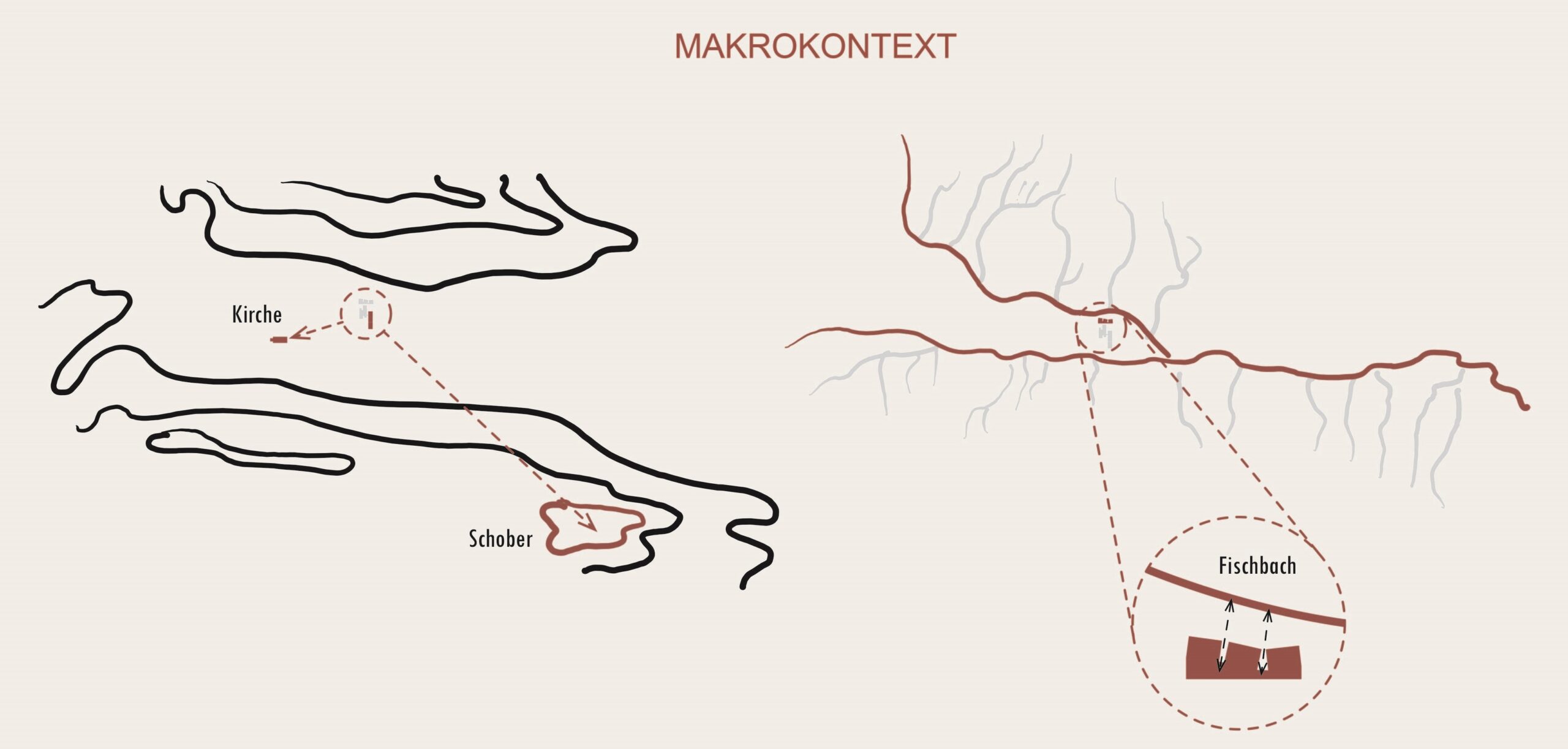
Our Competition Team most recently participated in a competition to design a nursery school located in Thalgau, Austria. This challenge was not only interesting because we had to design a new building, but also as we had to adjust it to the existent building. The design area consisted of two parts. On the northern part, we designed a completely new nursery school, and in the southern part, a new building extension was added to the already existing building. These have been complemented by an underground car park and a new urban area in the south. In the north, the nursery’s mass with its broken form is adapted to nature, in this case a creek, at the site boundary, while the southern part is connected to the urban built environment, with its windows overlooking the nearby church tower, thus uniting these spaces to the center of Thalgau.
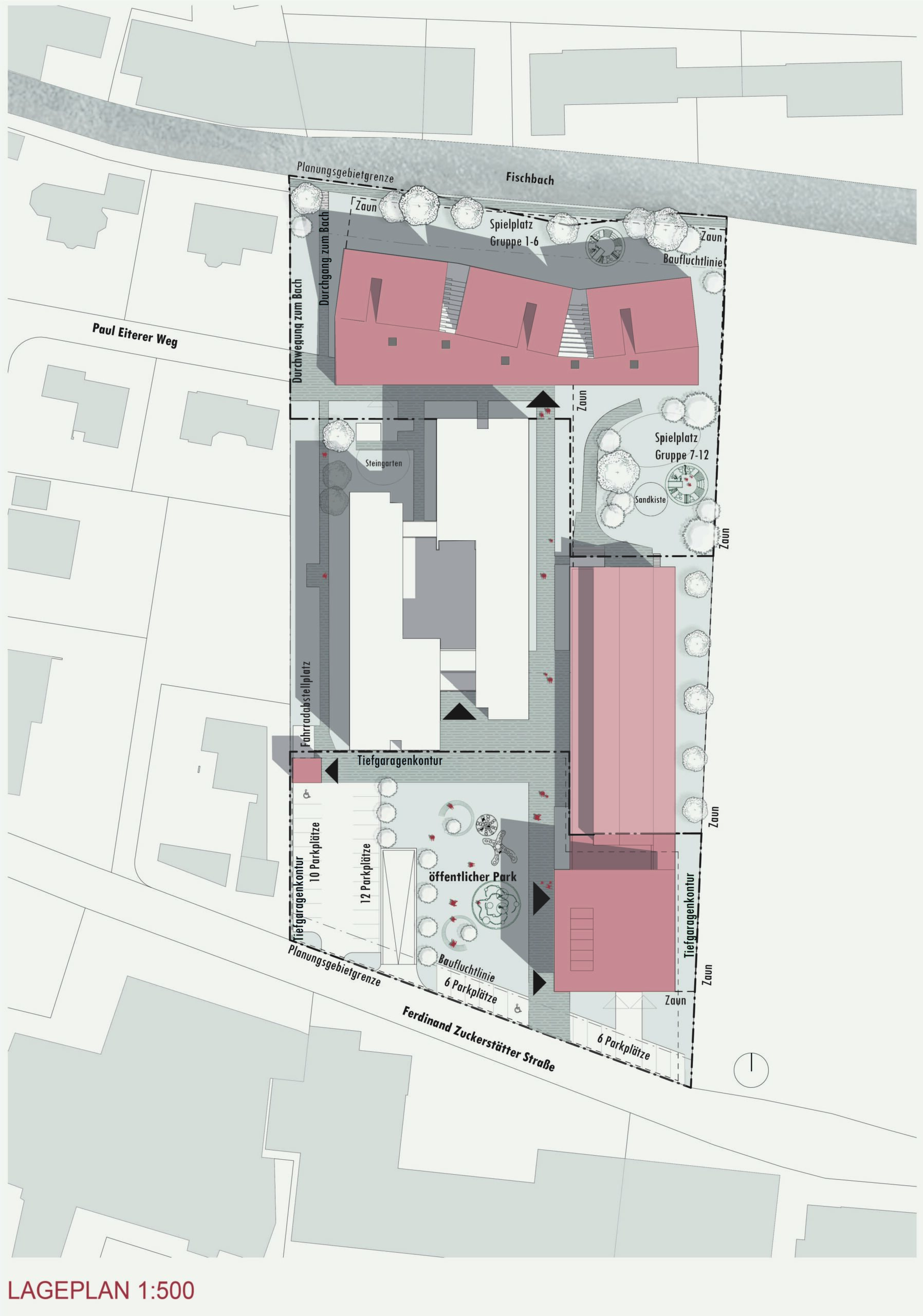
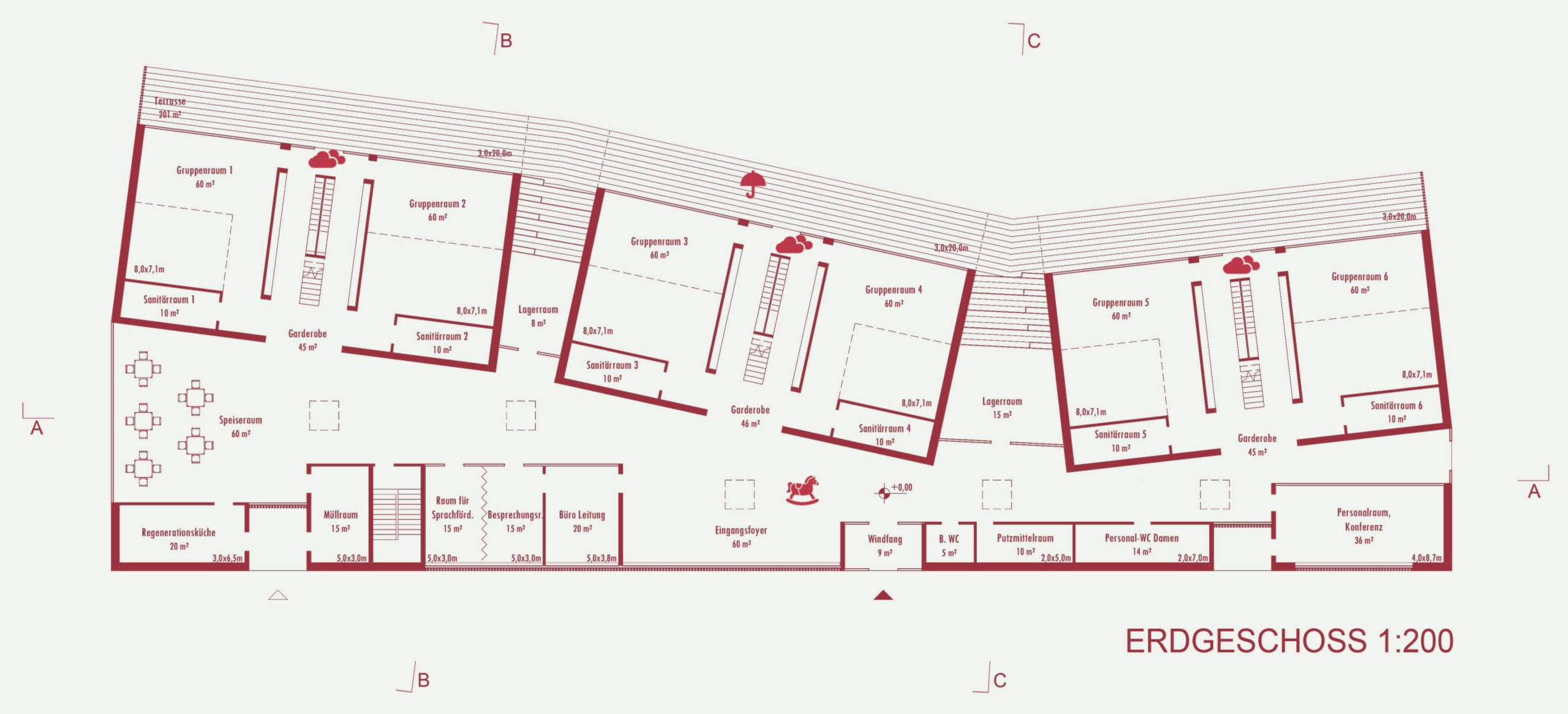
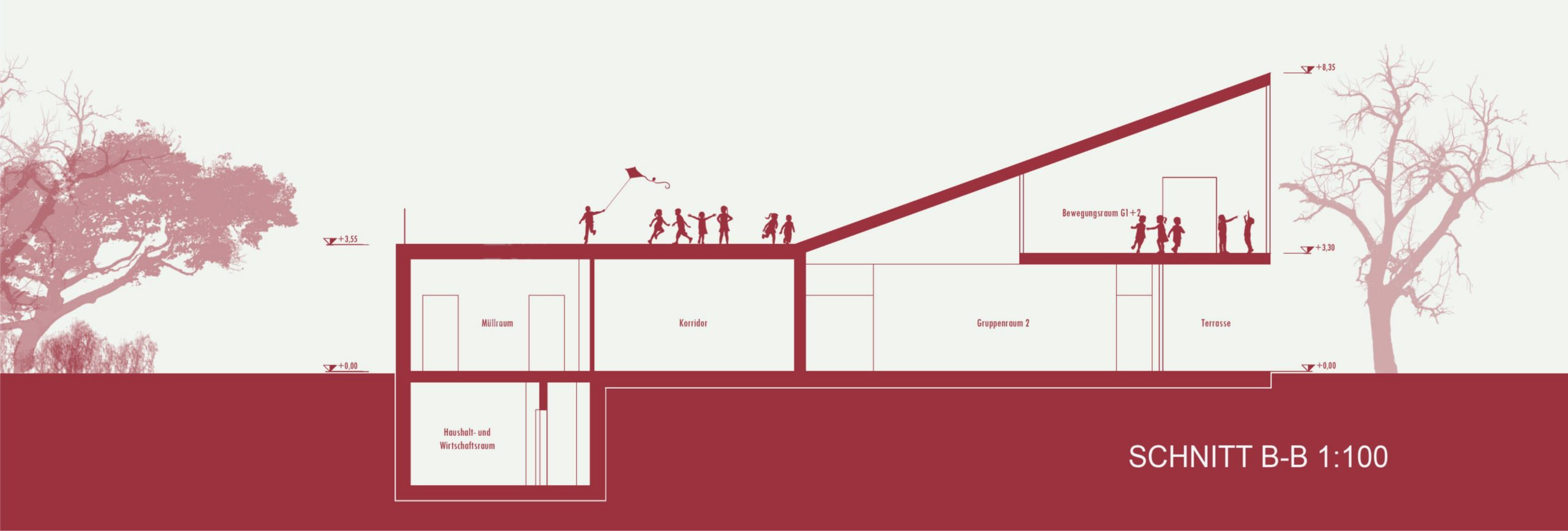
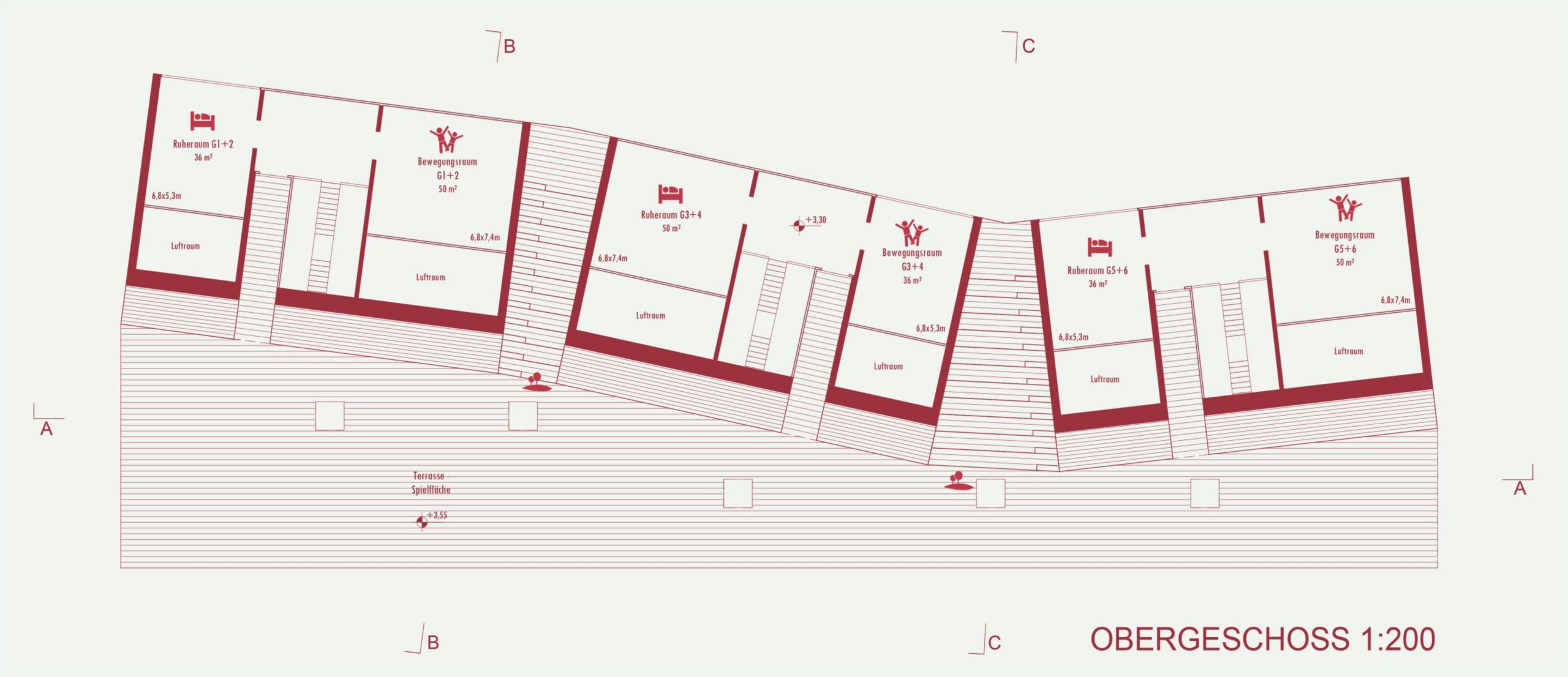
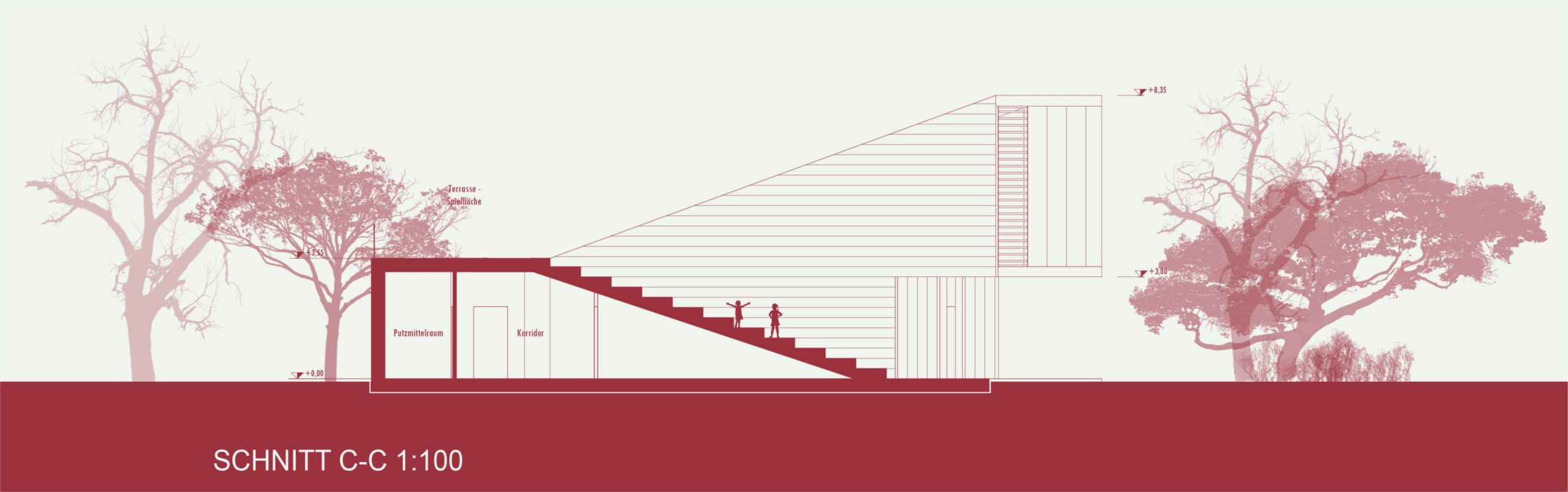
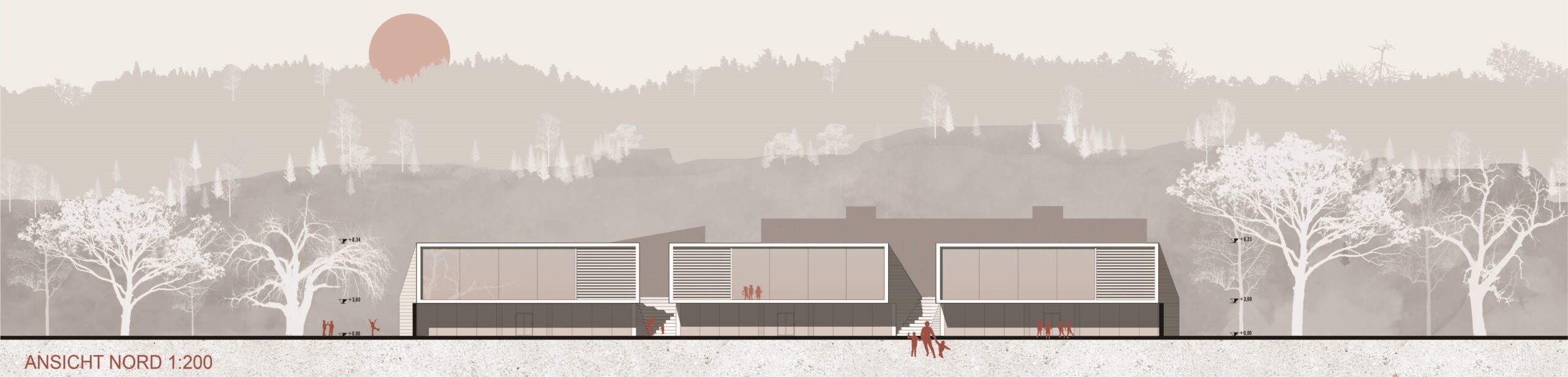
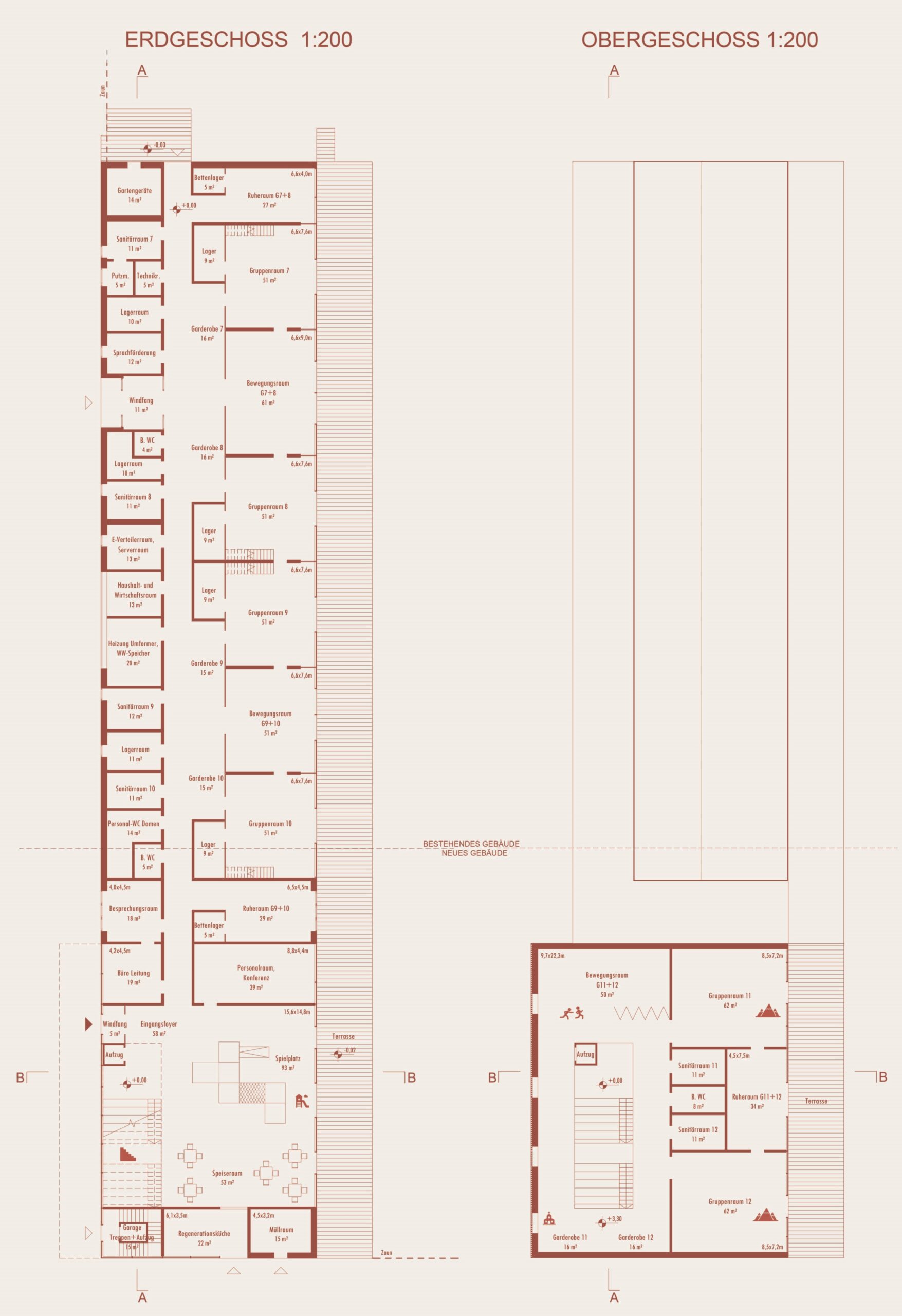
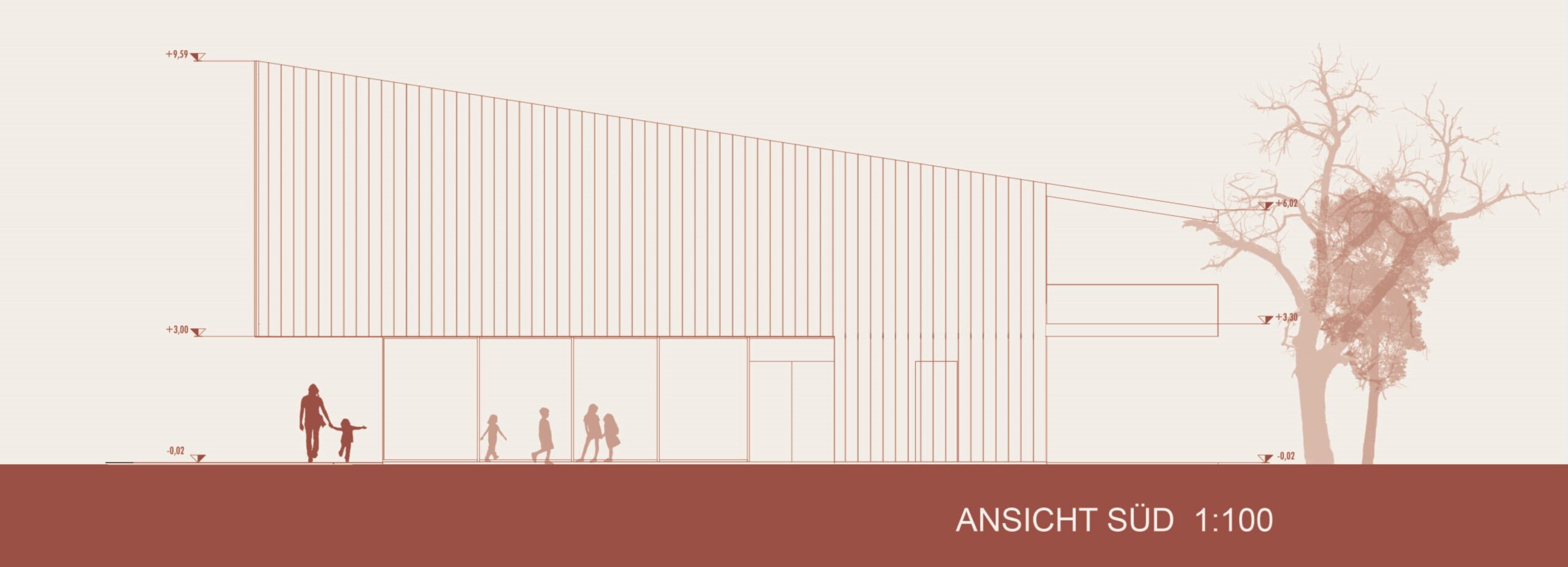
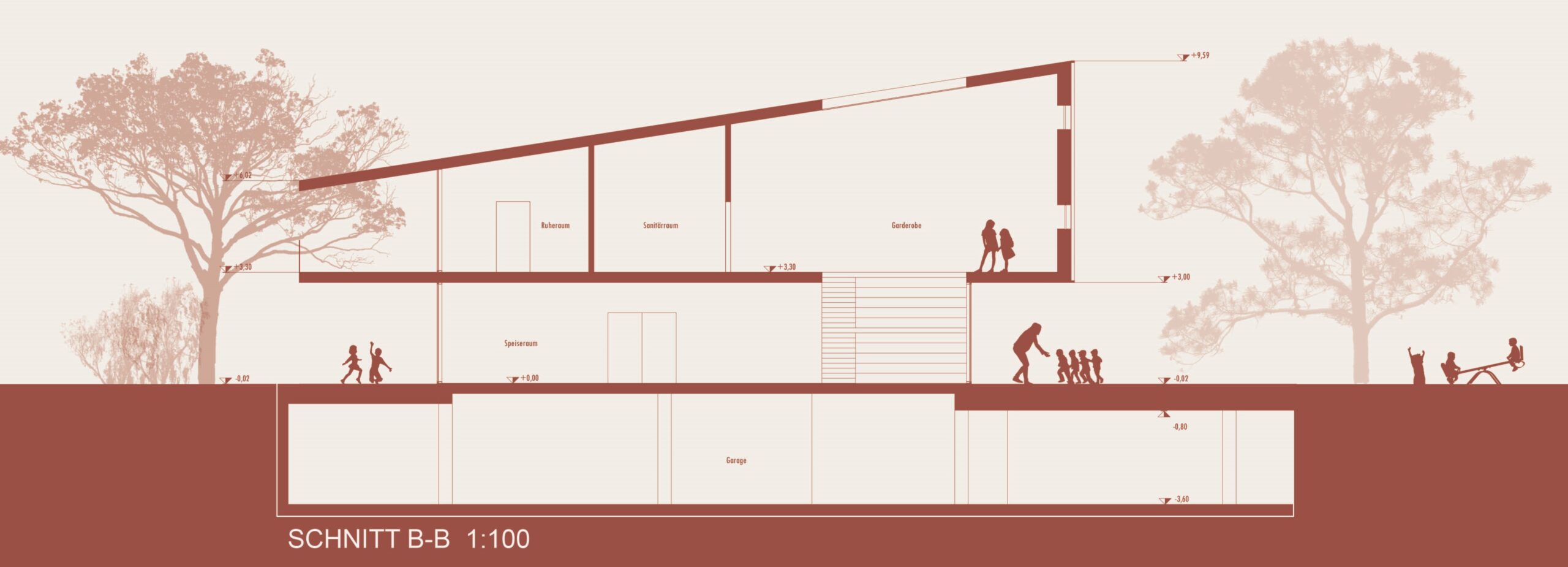

For the northern part, we have designed a brand-new building that is made of wood both in and outside. We enter the building from the south and reach the spacious lobby through a windbreak. This is where the offices, the other service areas, the dining room and the kitchen are located. The playrooms for the individual groups of kids are also on the ground floor, opening onto the stream, with a covered-open terrace on this side. Two of the rooms share a common hallway with the children’s lockers, and here are two staircases leading to the upper floor. Upstairs, there are gyms, which are parts of the classrooms, the recreation rooms, and the two exits to the roof.
We designed a huge playing area on the roof, from where the kids can take a peek at the hallway. The yard can be accessed through the two staircases towards the creek. In the southern part, we expanded the existent building with three classrooms to altogether six classrooms. Along with the new building part, we also created a new urban area with an underground car park under the building. On the ground floor, the new two-story building part was connected to the existent one-story building by a corridor link.
The main entrance opens up from the urban area, and leads to a large spacious lobby. Here you will find an indoor play area, the dining room with adjoining kitchen, and a large staircase with some seats leading upstairs. One more classroom was added to supplement the existing three on the ground floor. On the upper floor we only needed to design two extra classrooms, with a gym, a retreat room and a sanitary unit.
In order to create a spacious playing area on the upper floor as well, the gym can be connected to the staircase by removing a mobile wall. Both floors have a covered terrace, with a roof serving as an extension to the terrace of the existent building. Sustainability has been considered in the choice of construction materials and technology. We used timber cladding both indoors and outdoors. The cladding material on the façade is air-gapped, thinned lathing, similar to the existing building. Unfortunately, we did not place in the competition, but we are very proud of the design and the artwork.
Author: Petra Kaszap-Nagy
Recent posts
From idea to impact
At IN-EX, we believe that our greatest asset is the knowledge, experience and curiosity of our people. The Innovation Hub was created to ensure that our engineers’ ideas do not remain isolated suggestions: we give them space, develop them together, and take initiatives that create real value all the way through to implementation.
Structural Challenges of an Automated Warehouse System and a BIM-Based Solution
Our project serves as a good example of how adapting existing industrial buildings to modern technologies can present a complex engineering challenge. The implementation of the automated high-bay warehouse system involved not only a technological conversionbut also the adaptation of an existing reinforced concrete hall structure to new operational, structural, and fire safety requirements.
New Technology, Existing Structure: A Steel Structural Solution for the Conversion of an Automated High-Bay Warehouse
During the interior conversion of a high-bay warehouse attached to a manufacturing plant, it became necessary to install a state-of-the-art automated storage system. In the first phase of the project, we were commissioned to assess, at the conceptual design stage, whether the existing structural framework was suitable for accommodating the new technological system and to determine what structural modifications would be required to implement the conversion.
One Office, One Model: The Benefits of 3D Design and Multidisciplinary Collaboration
STUDIO IN-EX is a multidisciplinary design studio where almost every design discipline is represented under one roof. Every day, our colleagues experience the benefits of having designers from different disciplines work side by side, within a shared closed BIM environment and in the same office. What are these benefits in practice? We spoke to Lilla Vámos, one of our low-voltage systems designers, about her experience.
Case Study: Saving on Investment Costs Through Smart Warehouse Design
We believe that the investment cost of a project can be influenced to a significant extent during the design phase. For this reason, our approach goes beyond simply meeting the applicable requirements. We also investigate alternative technical solutions that can provide the same level of technical performance and safety while resulting in lower investment costs.
Model Checking Is Not About Finding Errors
In model-based design, a BIM model is no longer just a 3D representation. A well-structured model contains geometry, information, and discipline-specific relationships in a single source of truth. It drives drawings, quantity take-offs, schedules, equipment lists, technical data deliverables, and serves as the common platform for multidisciplinary coordination.