Reference
Design competition: Károli Gáspár University

Károli Gáspár University of the Reformed Church in Hungary (Károli Gáspár Református Egyetem) launched a design competition for the creation of a new university campus on a plot located at the intersection of Üllői út and Kinizsi utca.
- Location Budapest, Hungary
- Area 34.000 m2
- Categories
-
- Design competiton
- Services
-
- Concept Design
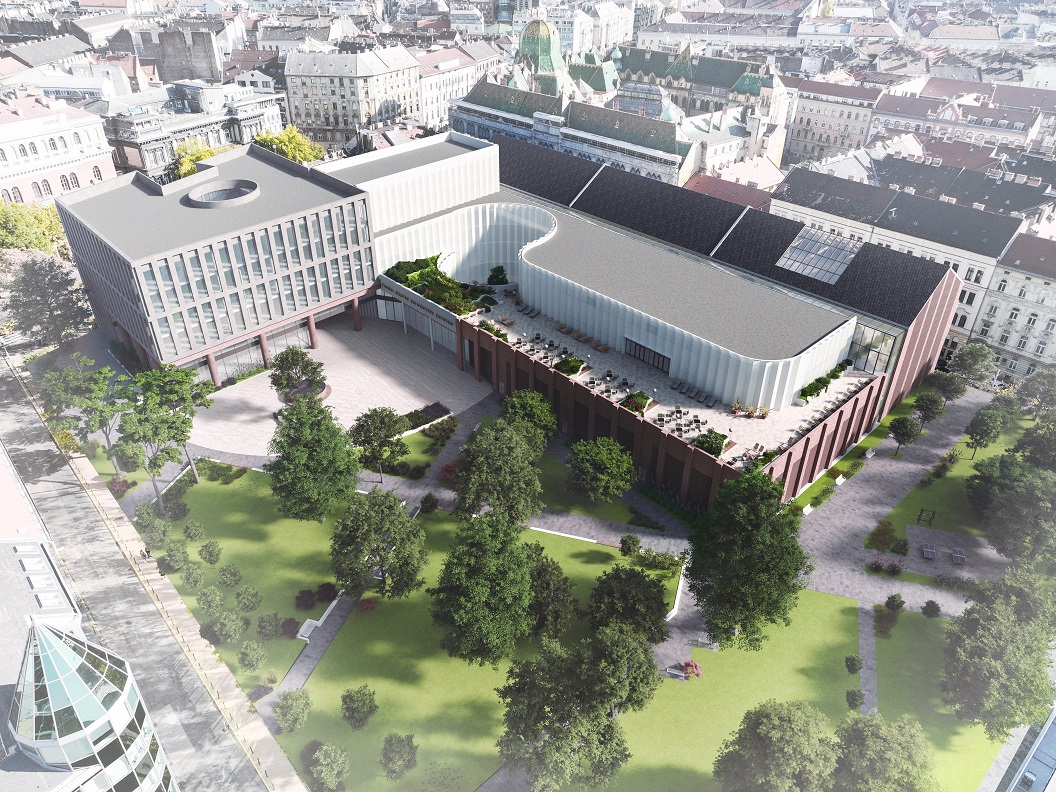
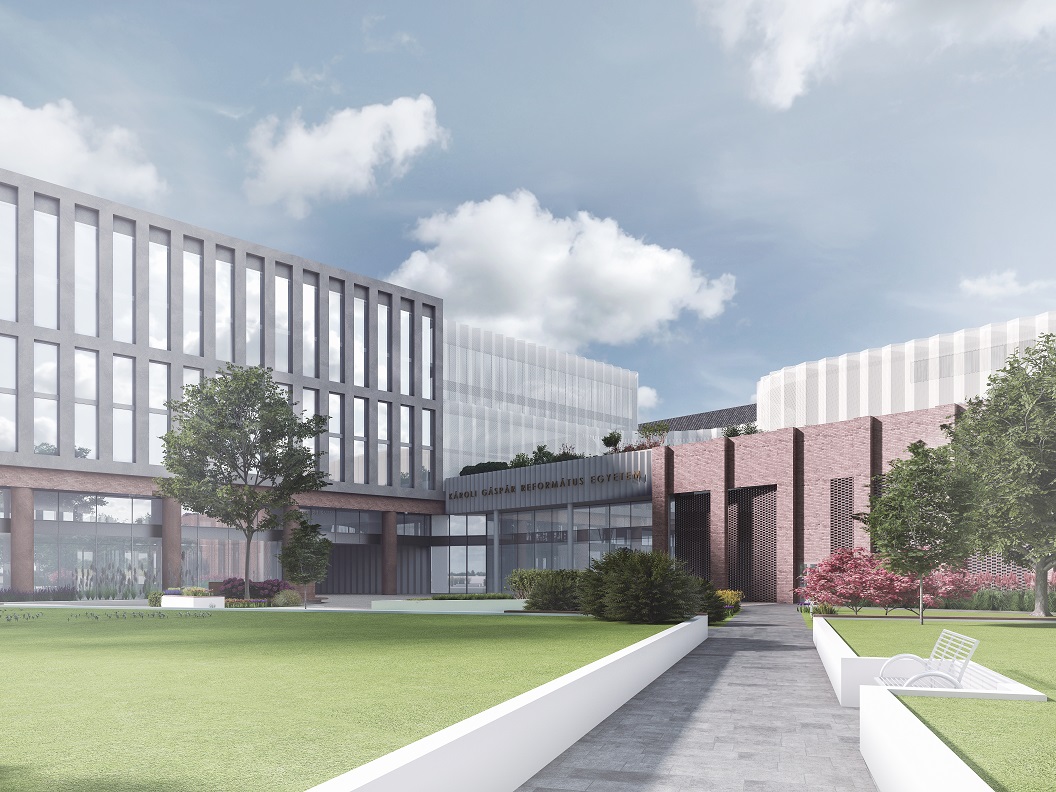
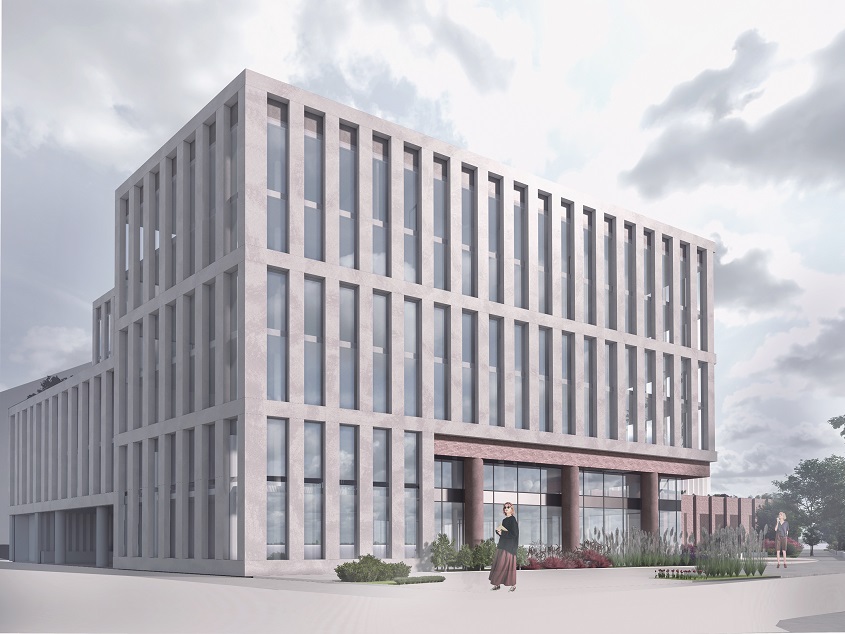
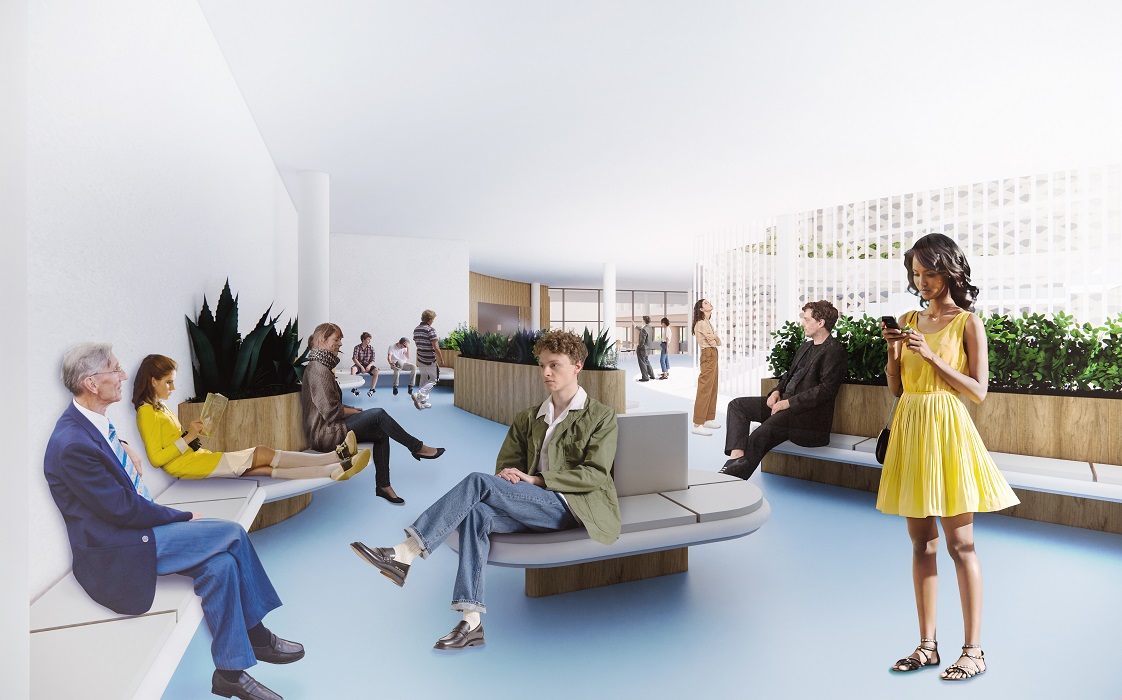
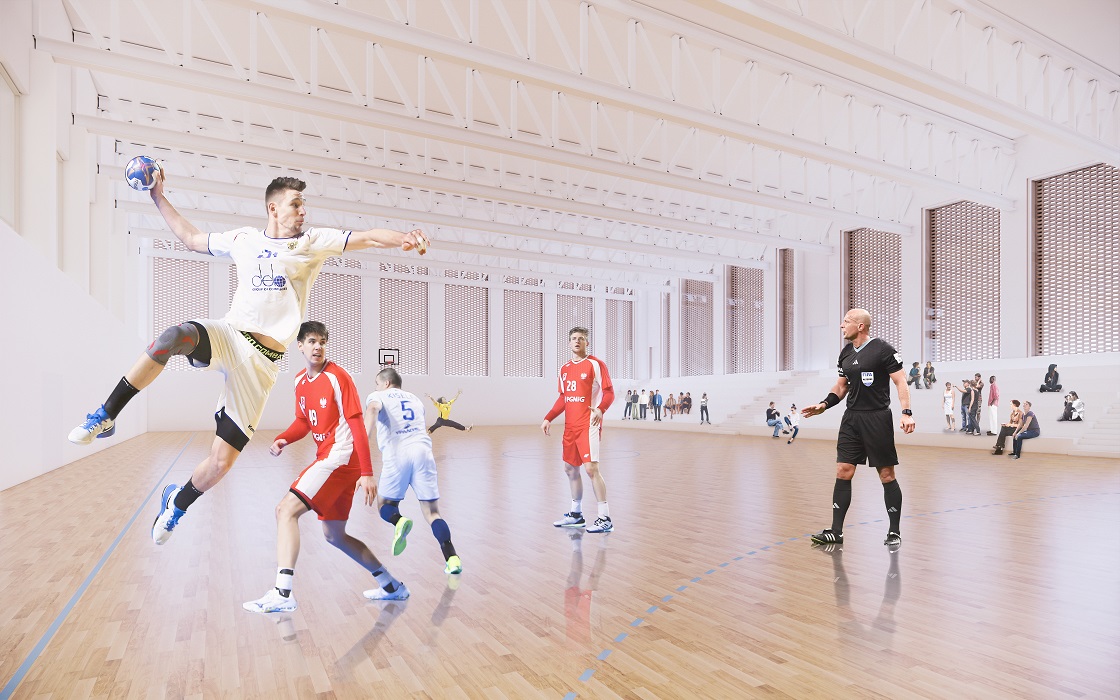
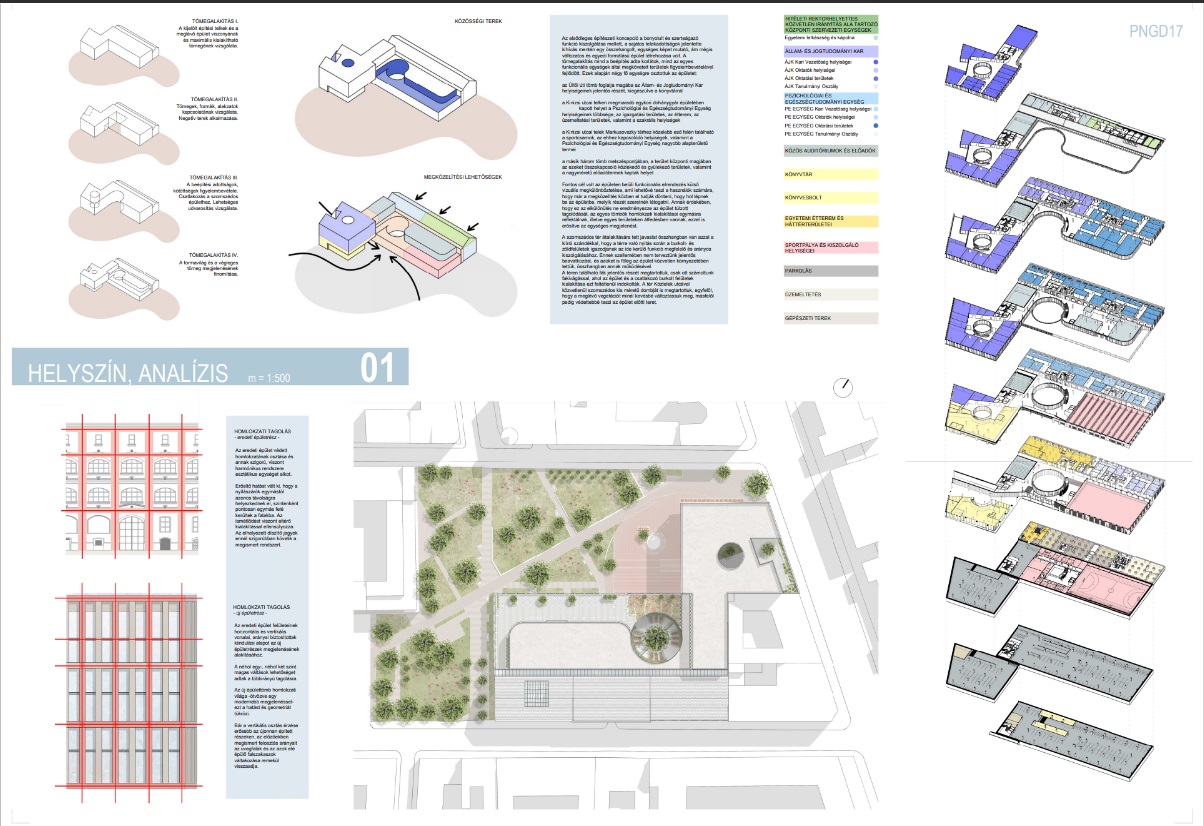
The primary architectural concept aimed to create a coordinated and unified yet varied and uniquely shaped building that not only serves a complex and multifaceted range of functions but also addresses the challenges posed by the specific characteristics of the site. The massing of the building evolved in consideration of both the limitations imposed by the site and the spatial requirements of the individual functional units. Based on this, the building was divided into four main units:
– The block on Üllői út houses the majority of the rooms for the Faculty of Law, complemented by the library;
– the former tobacco factory building on the Kinizsi utca plot accommodates most of the rooms for the Psychology and Health Sciences Unit, the administrative areas, the canteen, the operational facilities, and the sacred spaces;
– the gym is located on the side of the Kinizsi utca plot closer to Markusovszky tér, along with the associated rooms and the larger lecture halls of the Psychology and Health Sciences Unit;
– the circulation and gathering areas that connect these units, as well as the large lecture halls are situated at the intersection of the other three blocks, in the central core of the site.
A key goal was to make the internal functional layout visually distinguishable from the outside. This allows users to decide, even during approach, where to enter the building and which part they wish to visit. To prevent this separation from resulting in an overly fragmented structure, the façades of the different blocks reflect each other and overlap in certain areas, thus reinforcing a unified appearance.
Regarding the redesign of the adjacent public space, no major interventions were planned. Modifications were limited mostly to the immediate surroundings of the building and were made in harmony with its operation. A significant portion of the existing trees on the square were preserved; the cutting of trees was only considered where it was absolutely necessary for the construction of the building and the adjoining paved areas.
The primary architectural concept aimed to create a coordinated and unified yet varied and uniquely shaped building that not only serves a complex and multifaceted range of functions but also addresses the challenges posed by the specific characteristics of the site. The massing of the building evolved in consideration of both the limitations imposed by the site and the spatial requirements of the individual functional units. Based on this, the building was divided into four main units: