
Reference
Design competition: New Transylvanian Architecture Centre

With the vision of the New Transylvanian Architecture Centre, the Issuer has set itself the goal of creating a cultural centre that will provide six institutions operating in Sepsiszentgyörgy with new infrastructure that meets all of today's requirements.
- Location Sepsiszentgyörgy, Romania
- Area 25.500 m2
- Categories
-
- Design competiton
- Services
-
- Concept Design
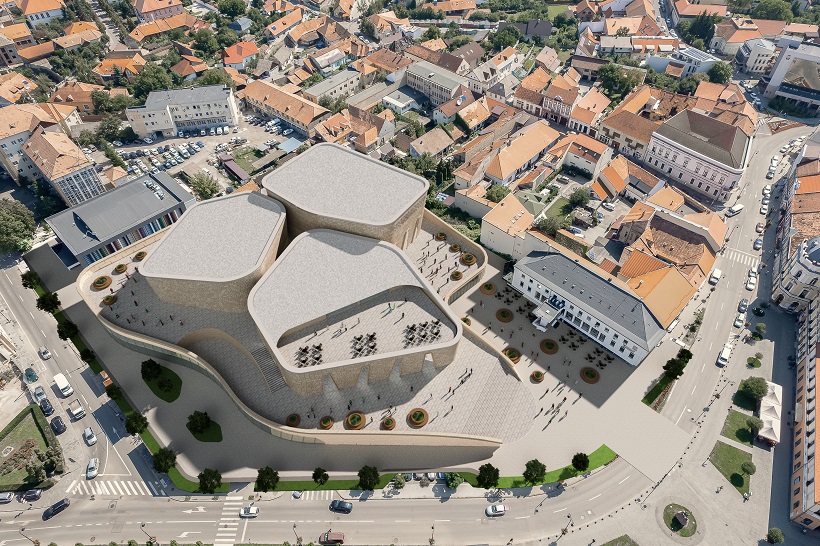
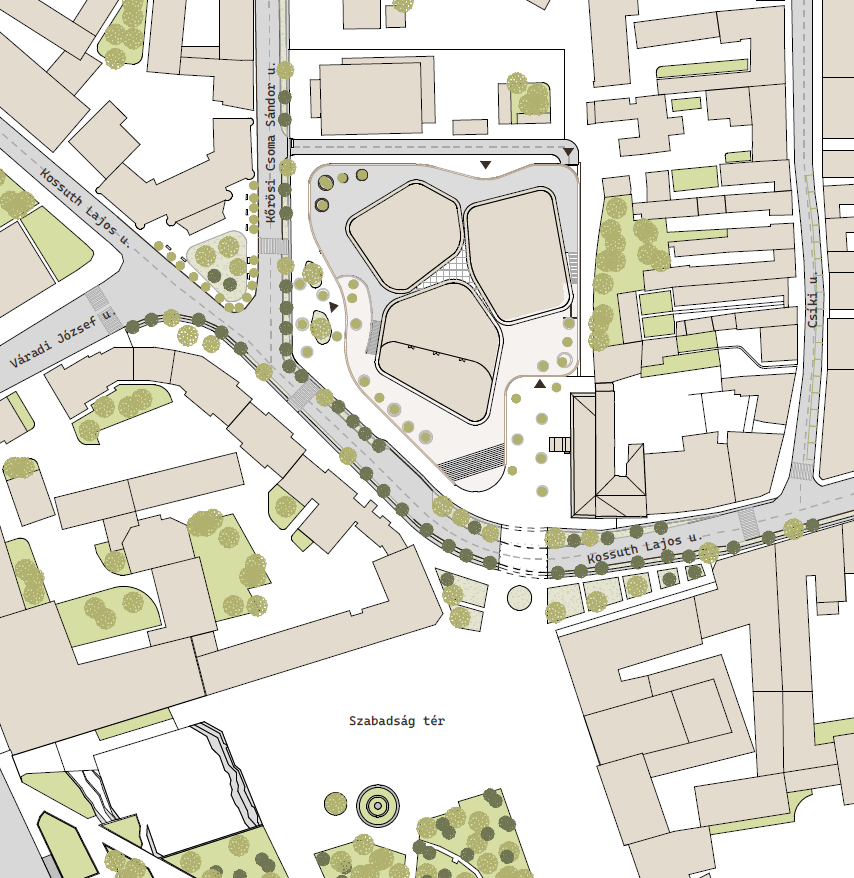
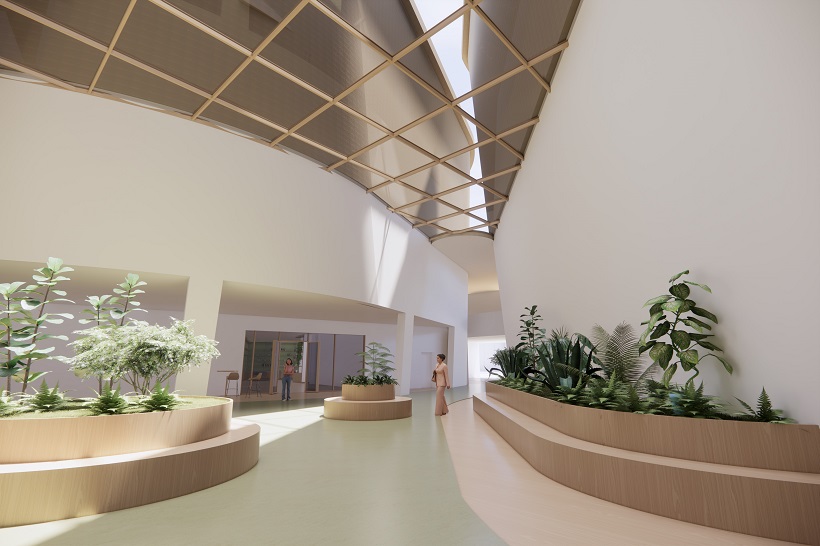
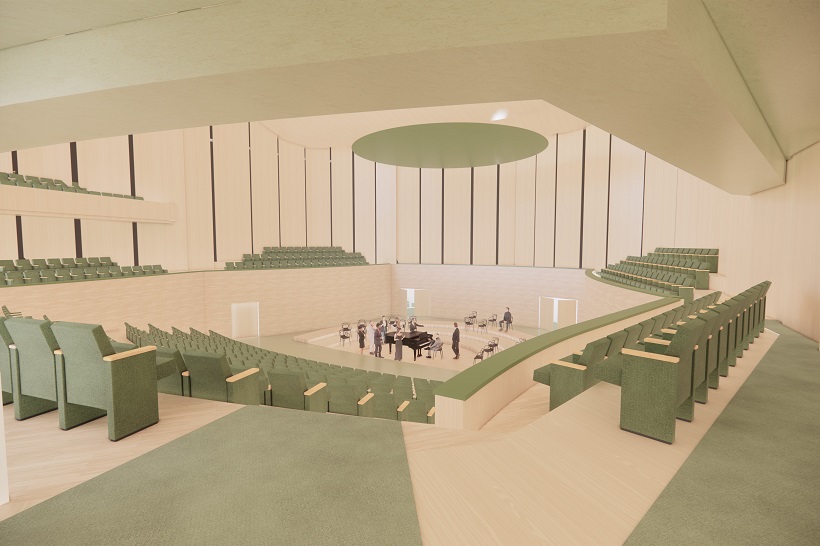
By envisioning the New Transylvanian Architecture Centre, the Issuer has set itself the goal of creating a cultural centre that will promote the revitalisation of cultural life in and around Sepsiszentgyörgy. This centre will provide six institutions with new infrastructure that meets all of today’s requirements.
The aim is for the new centre to be open to everyone, a principle that is also reflected in its architectural design. The new building will promote Hungarian culture and become a regional centre. The Issuer specified that the new building should be seamlessly integrated into the town’s network of public spaces.
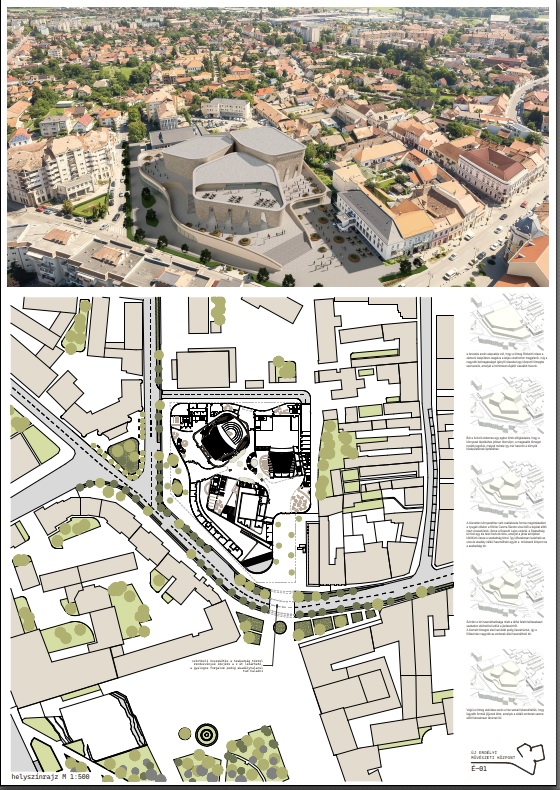
During the design process, our aim was to create a building that would clearly demonstrate its status as a public building by appearing open and accessible to all, while also taking advantage of the site’s characteristics and integrating it into the urban fabric. The building’s sandstone and large glass surfaces respond to the surroundings of Háromszék, while its distinctive shape promotes recognition of its public building status.
When determining the solutions, the theoretical layouts, functional designs and operational characteristics depicted in the presented plans, we took into account the potential for further development of the neighbourhood and the neighbouring plots, as well as possible changes to the urban fabric.
From the perspective of architecture and urban planning, we deemed it essential to determine traffic directions and connect to the urban fabric. The site is characterised by a series of closed-row urban buildings surrounded by curved roads. From a human perspective, the walking routes in this area are very exciting: due to the curves, each building and view is gradually revealed, and the closed-row sections give the area an urban feel.
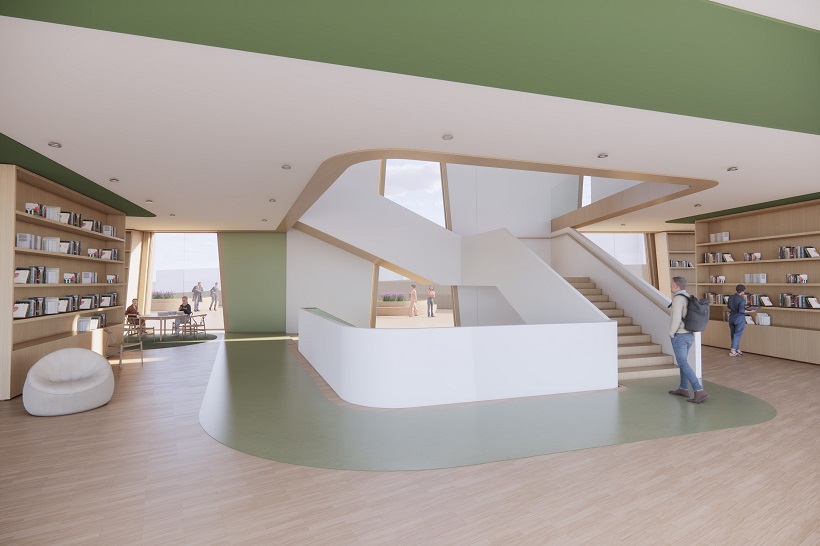
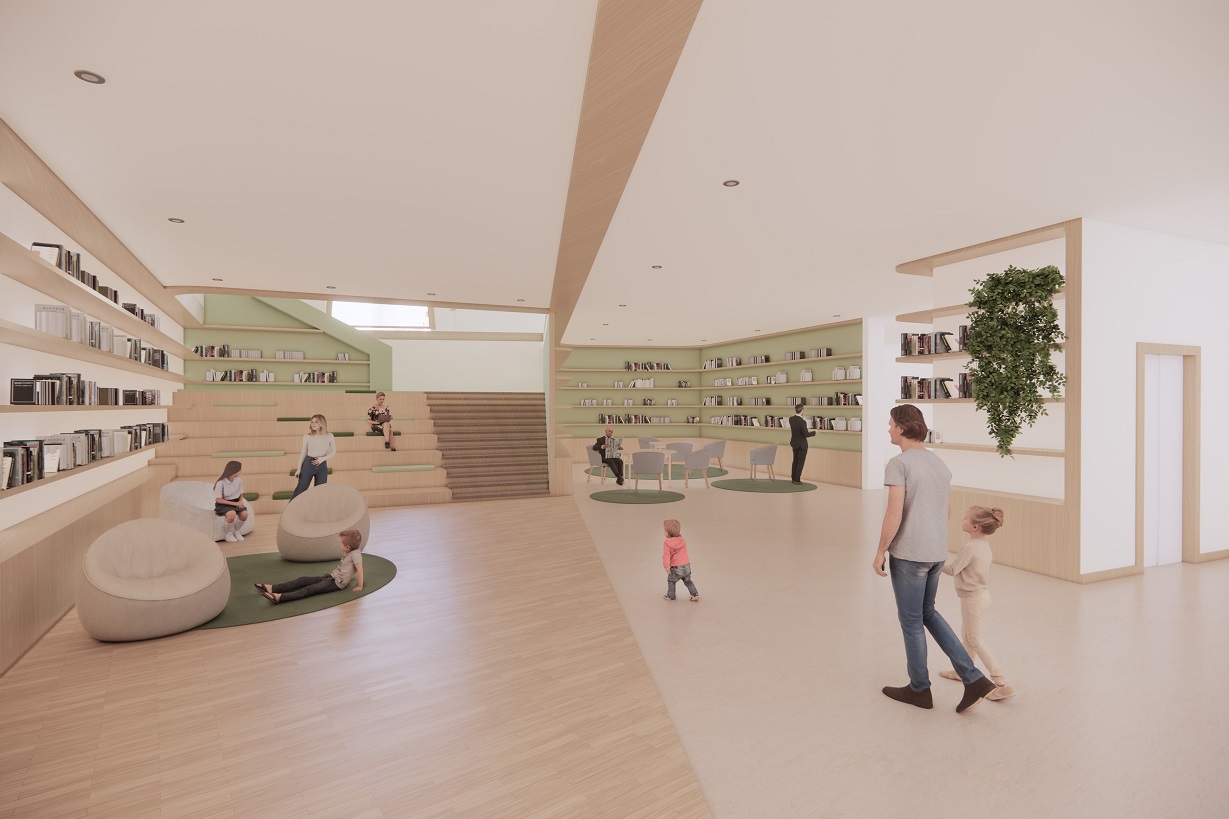
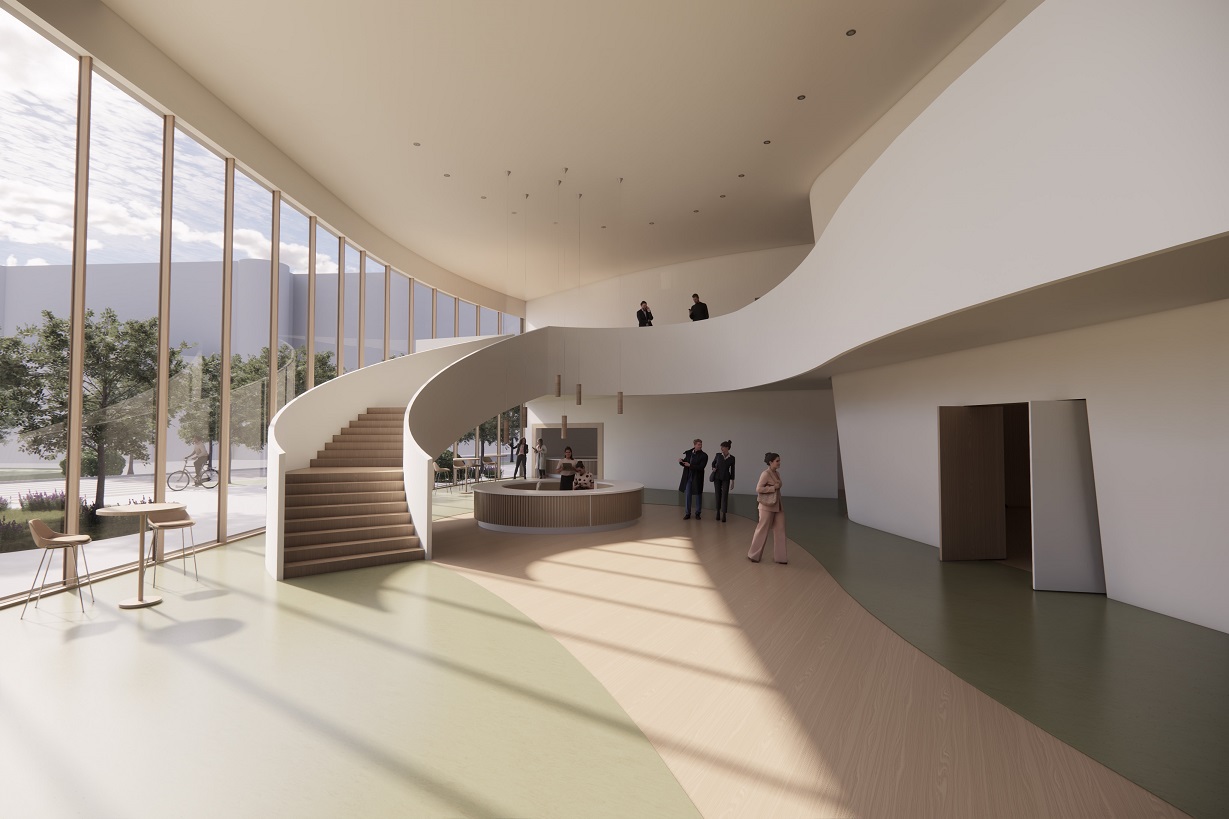
The interior spaces are dominated mostly by green colours and wooden surfaces. These are occasionally replaced by natural-coloured wall paint, complemented by plants placed throughout the interior.
Our main guiding principles when designing the interior spaces of the building were clean lines, simple and pure materials, ease of orientation within the building and the use of wood, a characteristic feature of Transylvanian architecture. The interior design of spaces that are particularly important from an acoustic point of view will be implemented at a later stage in the design process.