Blog
Introduction to Electrical Design in University Education

In university education, there is an increasing emphasis on practical knowledge in addition to theoretical education. Projects that combine practical and theoretical knowledge not only provide valuable experience for students, but also develop essential skills for future engineers. At the Kandó Kálmán Faculty of Electrical Engineering at Óbuda University, we have been involved in educational project since 2018, which is an excellent example of this.
The key elements of the project include learning about building requirements and standards for design tasks. The first step in the design process is the detailed mapping of the building’s functions and dimensions. A thorough knowledge of relevant standards such as OTSZ/TvMI is also essential.
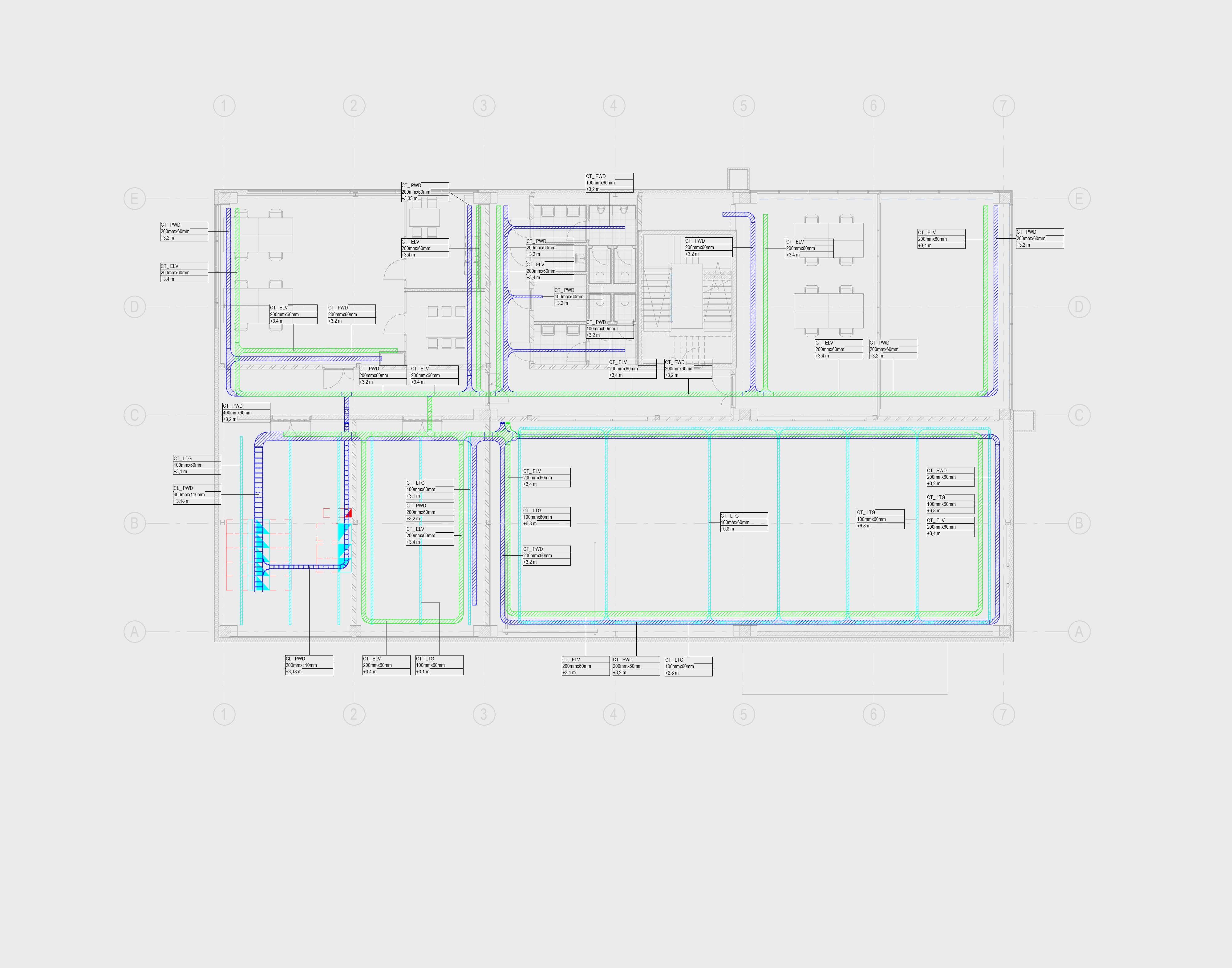
The next step is to process and evaluate the incoming data, considering both the customer’s needs and the requirements of the technology consumer and the building. This is a process that also includes the sizing of the maincables and the preparation of the single line diagrams. An important aspect at this stage is the consideration of the cable types, including fire resistance and other requirements, and the proper preparation of the cable list and the single line diagram.
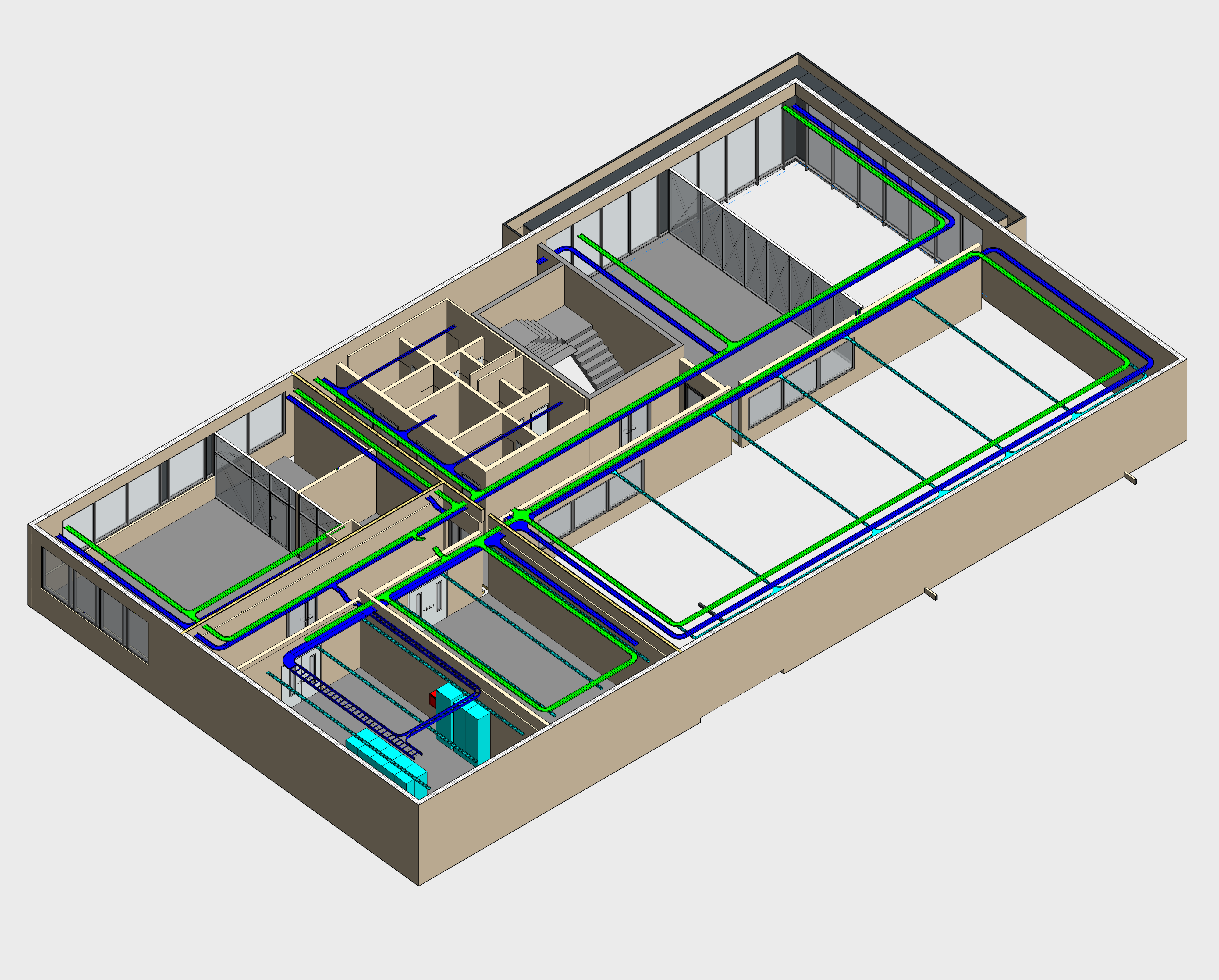
The 3D modelling of the building’s energy transmission system is a process that takes several weeks and runs in parallel with the other design tasks. It involves modelling not only the distribution equipment but also the supporting structures of the main cables. This is a particular challenge, as many factors must be considered, such as the correct design and loading of cable trays and cable ladders.
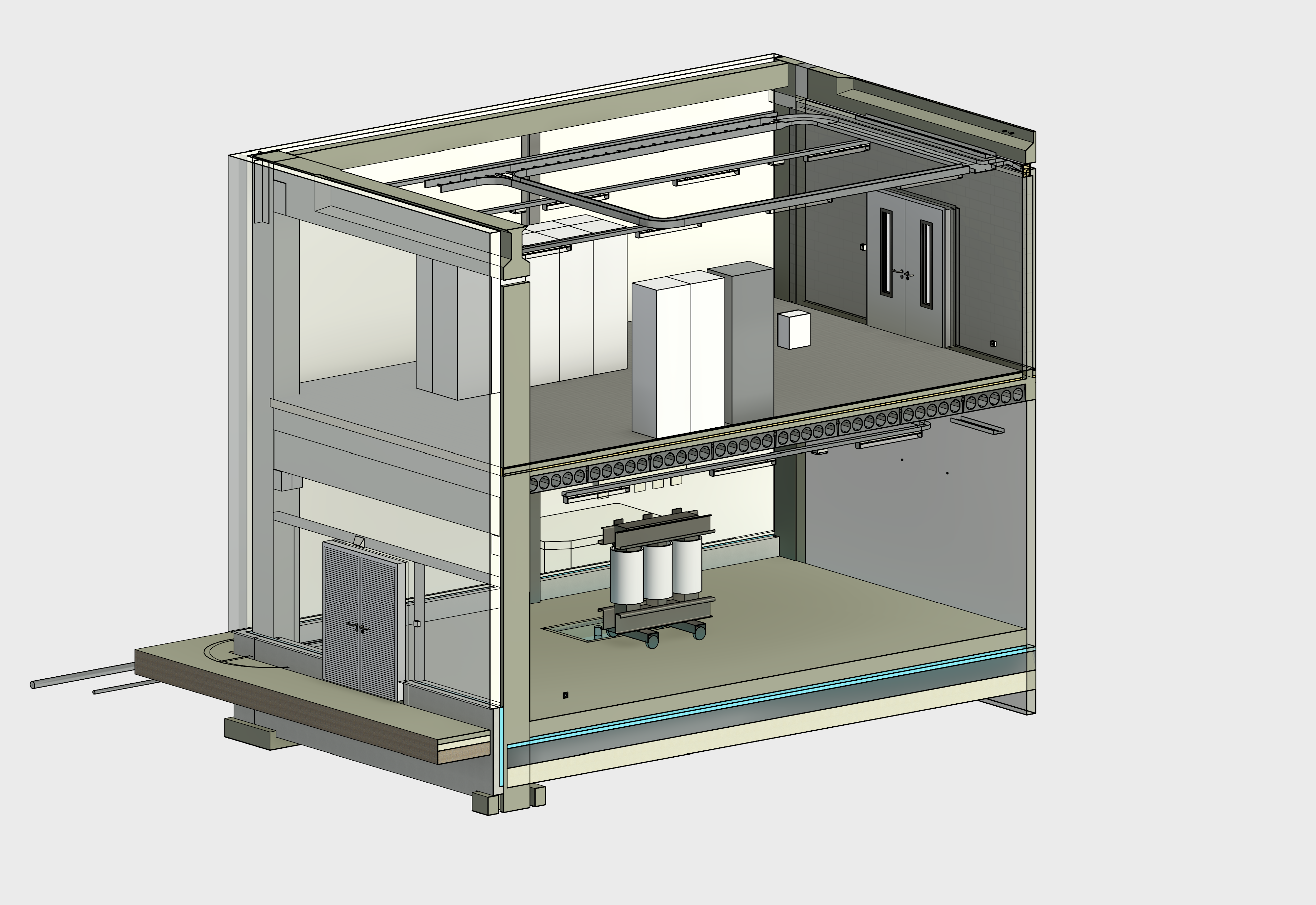
The building electricity design project at the Kandó Kálmán Faculty of Electrical Engineering at Óbuda University provides an excellent opportunity for students to gain practical experience and to deepen their knowledge of electrical engineering. In this way, they prepare themselves for future professional challenges and can build a successful career in electrical engineering.
Once students have completed their educational project, they will have the opportunity to join our internship programme. As part of their internship, we help them to prepare their thesis while giving them the opportunity to get to know and participate in the day-to-day activities of the company. In addition, we offer them long-term prospects in engineering positions that will allow them to develop further in-depth and professional contacts in their electrical engineering activities.
Author: István Bakos, Electrical Studio Leader
Recent posts
From idea to impact
At IN-EX, we believe that our greatest asset is the knowledge, experience and curiosity of our people. The Innovation Hub was created to ensure that our engineers’ ideas do not remain isolated suggestions: we give them space, develop them together, and take initiatives that create real value all the way through to implementation.
Structural Challenges of an Automated Warehouse System and a BIM-Based Solution
Our project serves as a good example of how adapting existing industrial buildings to modern technologies can present a complex engineering challenge. The implementation of the automated high-bay warehouse system involved not only a technological conversionbut also the adaptation of an existing reinforced concrete hall structure to new operational, structural, and fire safety requirements.
New Technology, Existing Structure: A Steel Structural Solution for the Conversion of an Automated High-Bay Warehouse
During the interior conversion of a high-bay warehouse attached to a manufacturing plant, it became necessary to install a state-of-the-art automated storage system. In the first phase of the project, we were commissioned to assess, at the conceptual design stage, whether the existing structural framework was suitable for accommodating the new technological system and to determine what structural modifications would be required to implement the conversion.
One Office, One Model: The Benefits of 3D Design and Multidisciplinary Collaboration
STUDIO IN-EX is a multidisciplinary design studio where almost every design discipline is represented under one roof. Every day, our colleagues experience the benefits of having designers from different disciplines work side by side, within a shared closed BIM environment and in the same office. What are these benefits in practice? We spoke to Lilla Vámos, one of our low-voltage systems designers, about her experience.
Case Study: Saving on Investment Costs Through Smart Warehouse Design
We believe that the investment cost of a project can be influenced to a significant extent during the design phase. For this reason, our approach goes beyond simply meeting the applicable requirements. We also investigate alternative technical solutions that can provide the same level of technical performance and safety while resulting in lower investment costs.
Model Checking Is Not About Finding Errors
In model-based design, a BIM model is no longer just a 3D representation. A well-structured model contains geometry, information, and discipline-specific relationships in a single source of truth. It drives drawings, quantity take-offs, schedules, equipment lists, technical data deliverables, and serves as the common platform for multidisciplinary coordination.